English pronunciation, spelled in French sounds
We built ri-PITE for Amanda McLane Attali and PEPS, her Paris pronunciation method, which respells every English word with sounds a French speaker already knows how to say: “system” becomes CISSE-thème. The app puts that method on the phone, with a reference recording and a microphone check.
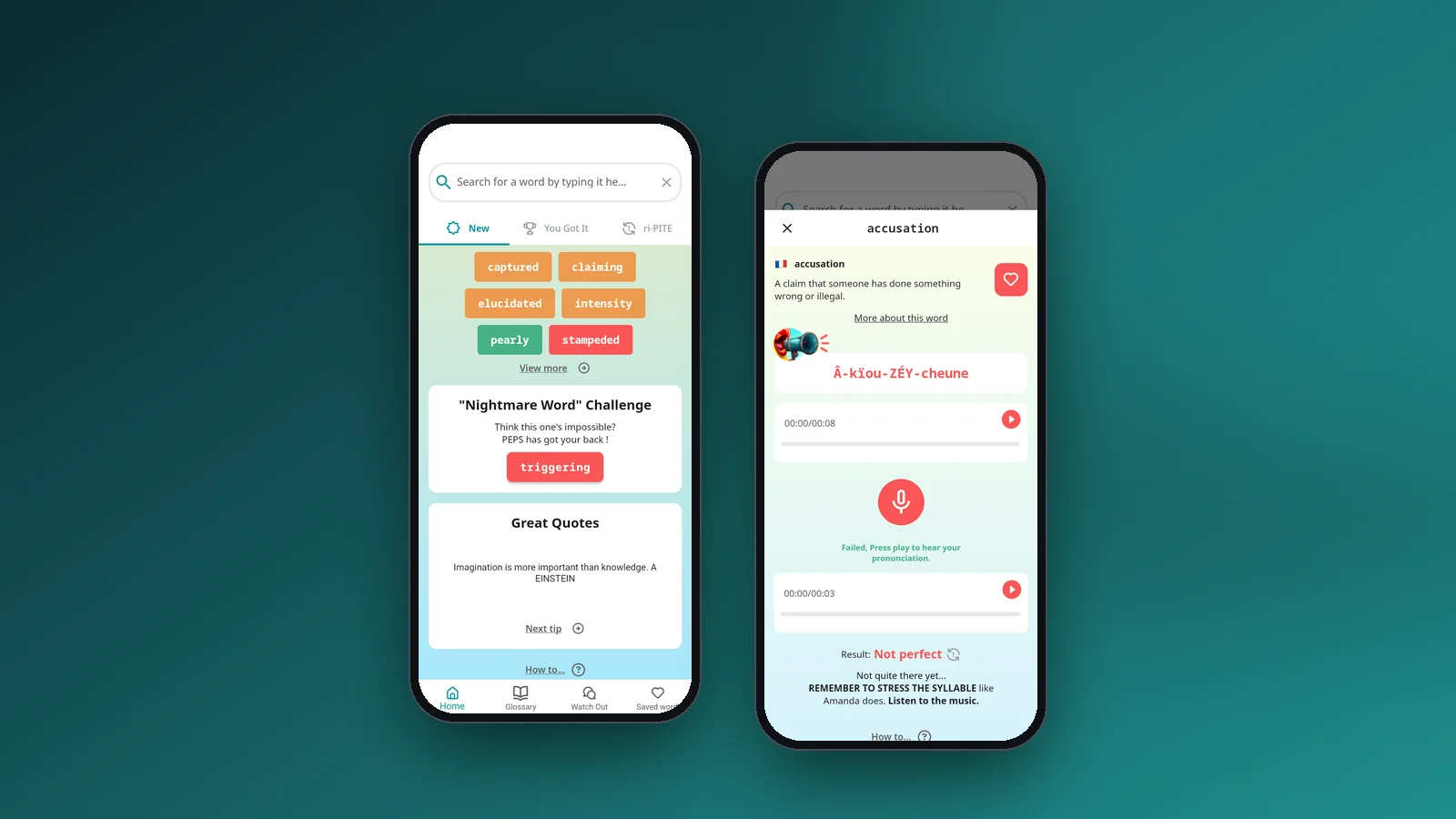
ri-PITE is the app for PEPS (Perfect English Pronunciation Solutions), Amanda McLane Attali's method for teaching French speakers English pronunciation by respelling each word with French sounds: “super” is SOU-peur, “surprise” is sœur-PRISE. We designed and built it for Android, iPhone and iPad. The learner hears the word, says it into the microphone and the app tells them whether it passed. The PEPS team publishes words from a spreadsheet.
- Client
- Amanda McLane Attali · PEPS
- Sector
- Language training
- Where
- Paris, France
- Year
- 2024
- Deliverables
- Android, iPhone and iPad app
- Microphone pronunciation check
- Audio conversion server
- Publishing flow from Google Sheets
- The app's privacy policy
- Services
A method that lived on paper and in class
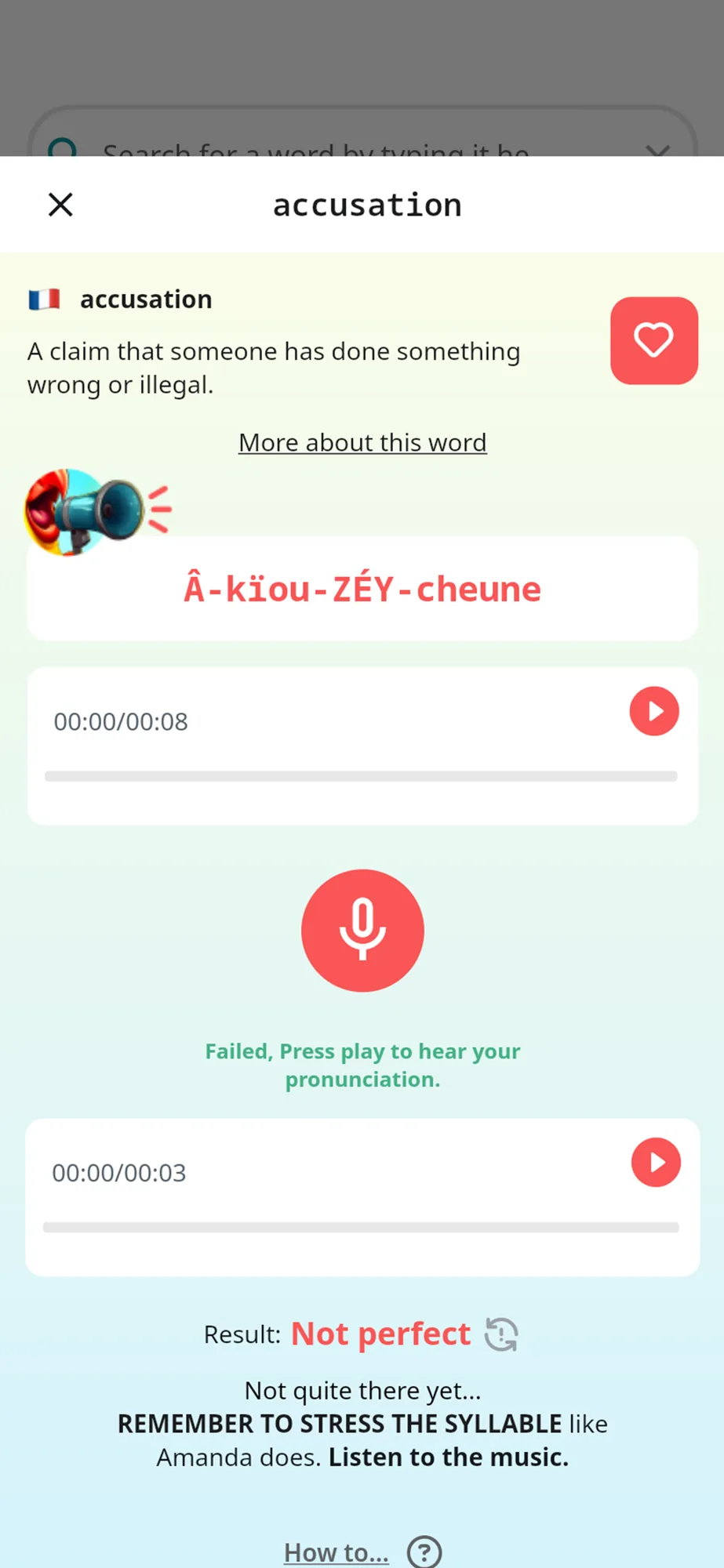
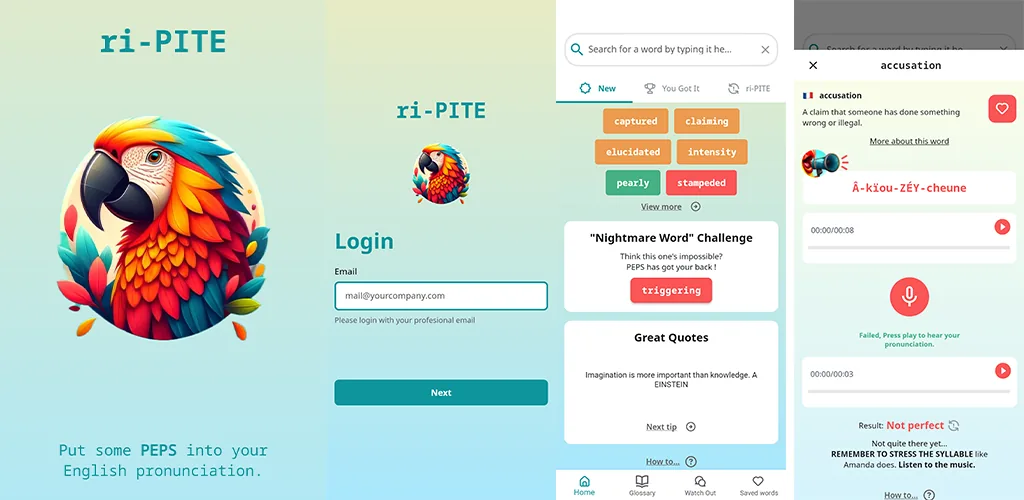
PEPS works with French-speaking professionals who use English at work. Its method skips the phonetic alphabet: each English syllable is written with the closest French sound, separated by hyphens, and the stressed syllable goes in capitals. “Accusation” is written Â-kiou-ZÉY-cheune. It works in class with a teacher, but between sessions learners had nothing to practise with.
The brief was to put that method on the phone: every word with its PEPS spelling and its audio, a way to know whether you said it right, and access reserved for PEPS clients.
Hear it, repeat it, check it
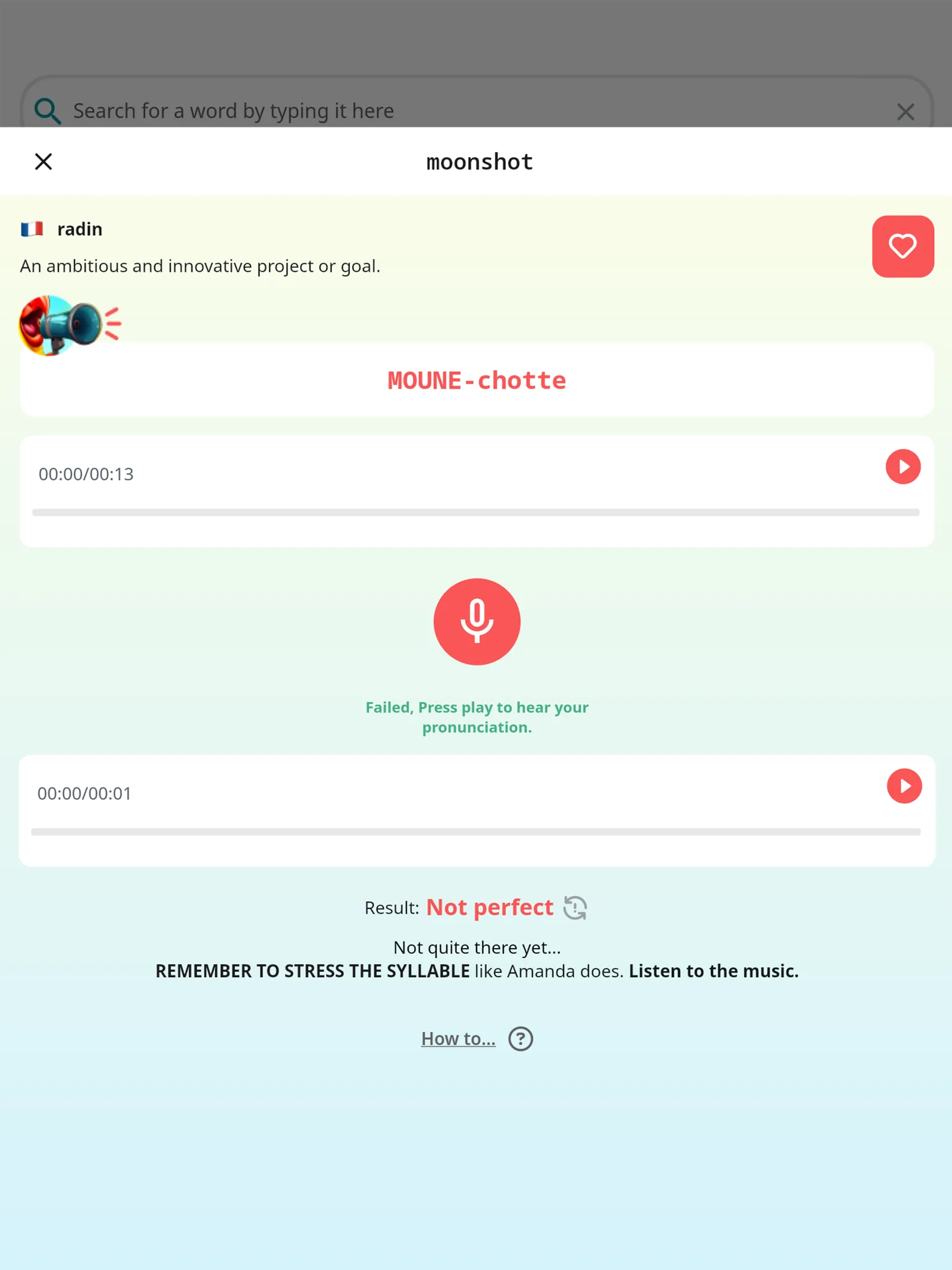
Each card shows the word, its French translation, an English definition, the PEPS spelling and the reference audio in Amanda's voice. The learner taps the microphone and says the word. The recording goes to our conversion server, which turns it into an MP3, then to a speech-to-text service. If the transcript contains the word, the attempt moves to “You Got It”. If not, the app shows “Not perfect”, lets the learner play their own recording next to the reference and gives a tip, such as “stress the syllable like Amanda does”. The check is deliberately simple: it says whether the word is understood, and does not score the accent.
Words are not built into the app. The PEPS team adds a row to a Google Sheet, or flags an existing one for update, and an n8n workflow picks up the MP3, uploads it to Cloud Storage and writes the card to Firestore with 8 fields: word, PEPS spelling, audio, translation, definition, “more about this word” text, difficulty and the nightmare-word flag. An admin link re-converts a word's audio when needed.
The app is built in FlutterFlow on Firebase. Sign-in uses a work email and an activation code issued by PEPS. The microphone is used only for the pronunciation check.
-
01
The PEPS spelling on every word
Syllables split by hyphens, the stressed one in capitals: MOUNE-chotte for “moonshot”, CISSE-thème for “system”. Learners read sounds they already know how to make.
-
02
Three piles of words
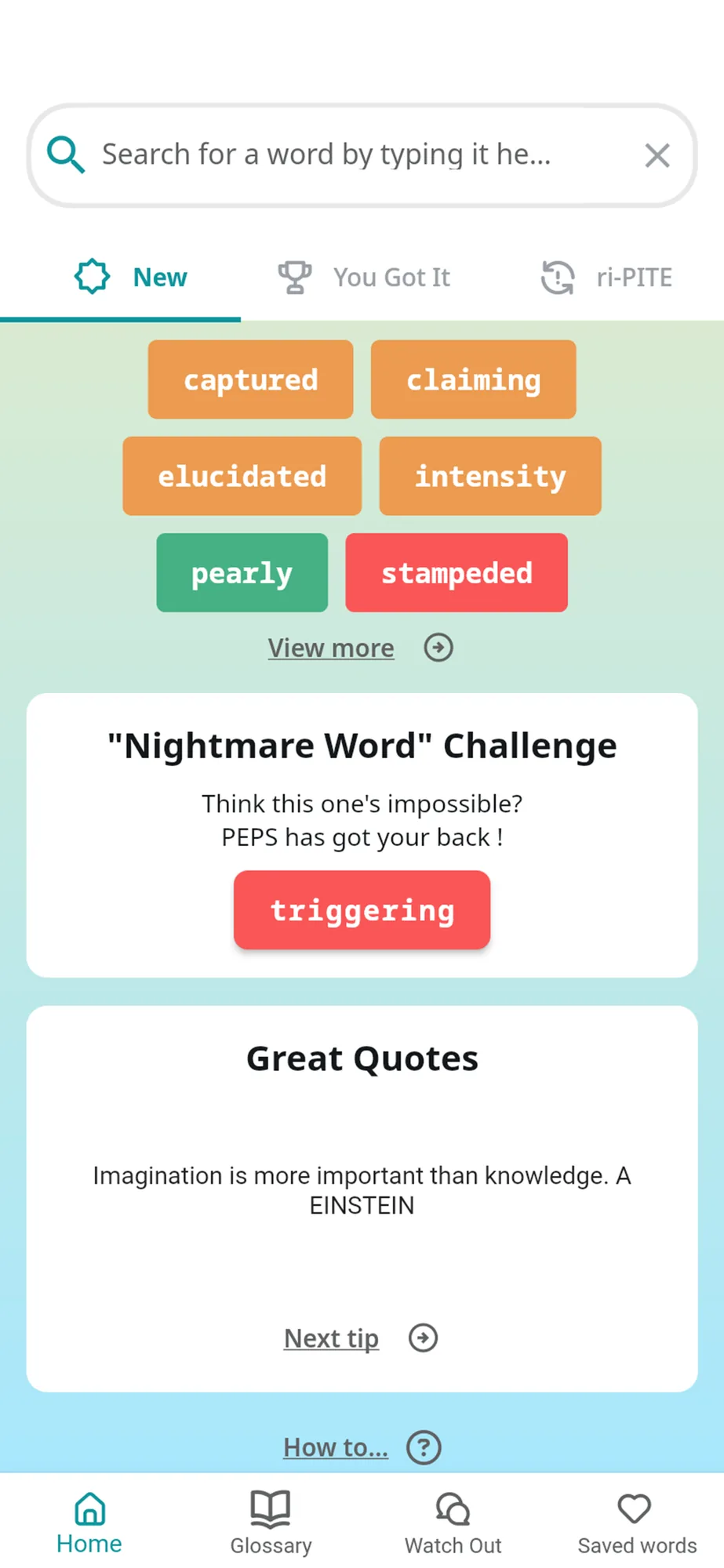
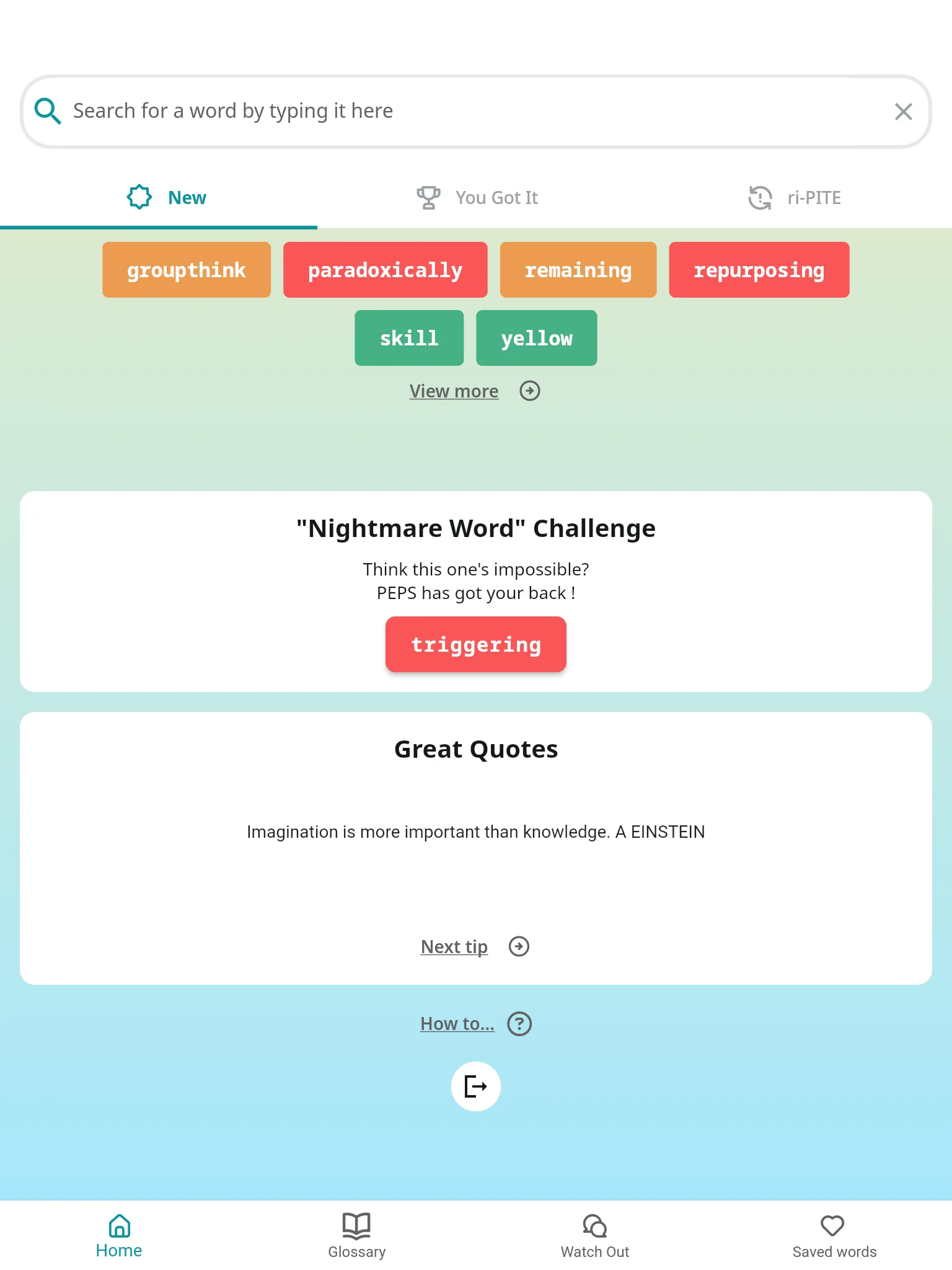
New for words to discover, You Got It for words that passed the check, ri-PITE for words to repeat. New words carry the colour of their difficulty.
-
03
The “Nightmare Word” challenge
The home screen offers one of the words PEPS flagged as a nightmare for French speakers, such as “triggering”, with the line “PEPS has got your back”.
-
04
Editing without an app release
PEPS publishes and corrects words from a spreadsheet. The app gets the new card without a new version.
The project in pictures
7 images · Open any image to see it full size.

What PEPS has today
PEPS learners practise between sessions with the same spelling they see in class, on Android, iPhone and iPad. New words reach the app from the spreadsheet, without a new app release. In August 2026, when our website moved servers, the publishing flow lost access to the MP3s; we gave it a private route to the audio, and adding and editing words worked again.
The screens on this page are the app captures from May 2024.
- Microphone pronunciation check on every word
- Dictionary edited from Google Sheets
- Access reserved for PEPS clients, with an activation code
- App on Android, iPhone and iPad
The questions we hear often
What is the PEPS method?
An English pronunciation method for French speakers: each word is written with the closest French sounds, syllable by syllable, with the stressed syllable in capitals. “Super” is written SOU-peur.
How does the app know if I said it right?
The recording is converted and transcribed by a speech-to-text service. If the transcript contains the target word, the attempt passes; if not, the app gives a tip and lets you compare with the reference audio.
Who can use ri-PITE?
PEPS clients. Sign-in asks for a work email and an activation code.
Cases close to this one
 Read more
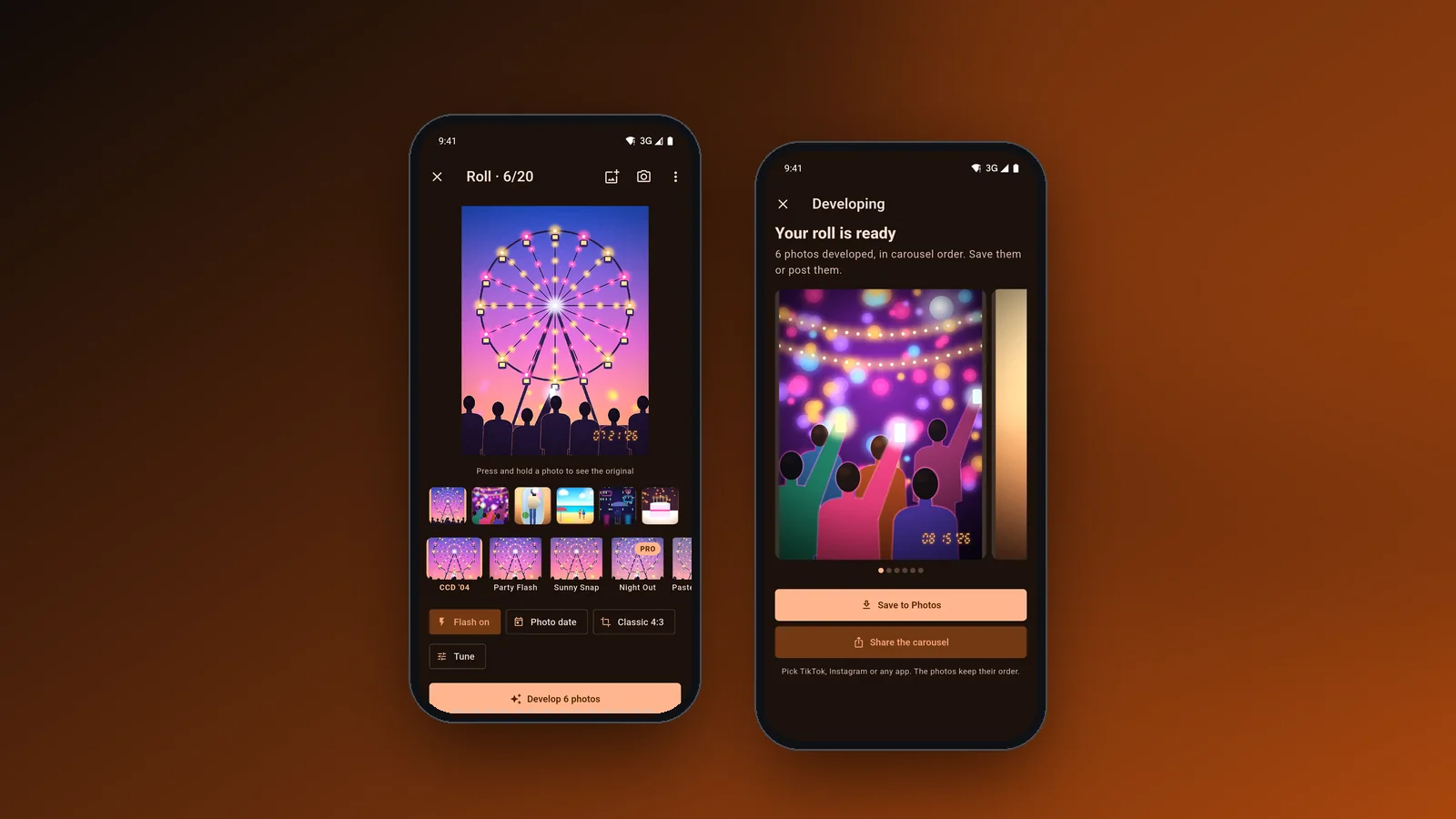
Flashdays · Photo app
A camera roll developed like it's 2006
Flutter app for Android and iOS that gives a whole roll the look of a 2000s compact camera and exports it as a carousel, developed on the phone's GPU.
Learn more →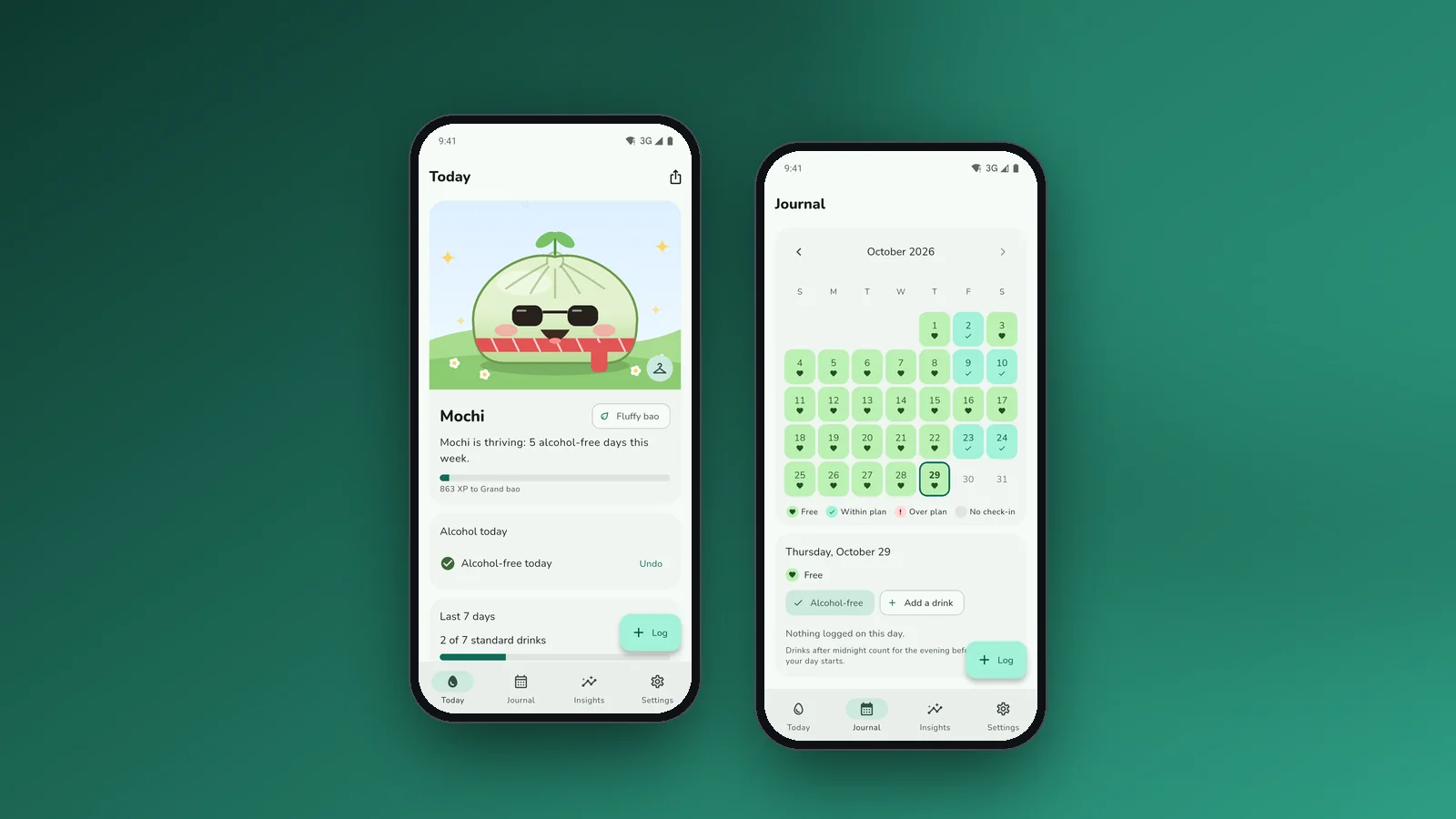 Read more
Dampling · Drink less
Drink less, and watch a pet grow
Flutter app for Android and iOS: an alcohol and nicotine journal that keeps its data on the phone, and a dumpling pet that grows on alcohol-free days.
Learn more → Read more
Veto · Private messenger
E2E messaging without a phone number
Extreme-privacy messenger: local identity with no phone number, end-to-end encryption, PIN vault and multi-relay delivery: operators see ciphertext only, never plaintext.
Learn more →Let's put it in production
Tell us your challenge. We reply within 24 business hours with an honest first read: if we can help, we'll say how; if not, we'll say who can.
I reply personally. No endless forms, no canned replies.